

Introduction
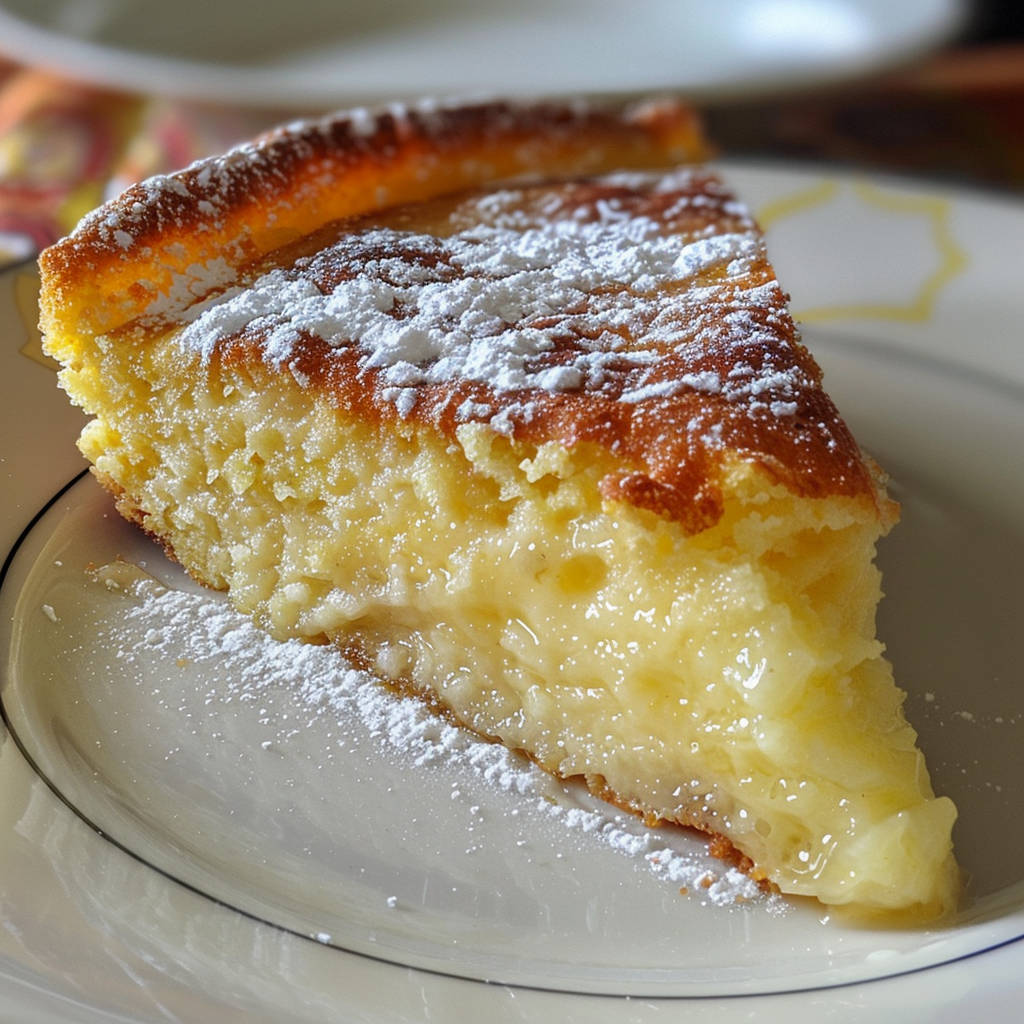
Experience the timeless charm of Italian baking with this Italian Grandma’s Lemon Custard Cake – Light Creamy & Classic Dessert. This cake beautifully balances bright, zesty lemon flavor with a silky custard-like texture that melts in your mouth. The gentle aroma of fresh lemon zest combined with vanilla makes every bite an irresistible delight. You’ll love this recipe for its simplicity, elegance, and that nostalgic homemade feeling that only a traditional dessert can bring. Whether you’re serving it for a family gathering or a cozy afternoon treat, this lemon custard cake is sure to impress and satisfy.
Prep Time, Cook Time, and Servings
Preparation takes about 15 minutes, with a baking time of 45 to 55 minutes. Allow additional time for the cake to cool completely before serving. In total, expect roughly 1 hour and 15 minutes from start to finish. This recipe yields 8 generous servings, perfect for sharing or enjoying over a few days.
Ingredients
- 4 large eggs, separated
- 3/4 cup granulated sugar
- 1/2 cup unsalted butter, melted
- 3/4 cup all-purpose flour
- 2 cups lukewarm milk
- 1/4 cup fresh lemon juice
- 1 tablespoon lemon zest (from about 1 medium lemon)
- 1 teaspoon vanilla extract
- 1/4 teaspoon salt
- Powdered sugar, for dusting
Step-by-Step Instructions
- Preheat the oven and prepare the pan: Set your oven to 170°C (340°F). Lightly grease an 8×8-inch baking dish with butter or non-stick spray to ensure the cake doesn’t stick.
- Separate the eggs: Carefully separate the whites from the yolks, placing them in two clean bowls.
- Mix egg yolks and sugar: Beat the egg yolks together with the granulated sugar until the mixture becomes pale and creamy, about 3-4 minutes. Use a hand mixer or stand mixer on medium speed for best results.
- Add wet ingredients: Slowly stir in the melted butter, fresh lemon juice, lemon zest, and vanilla extract. Mix until everything is smooth and well combined.
- Incorporate dry ingredients: Gradually add the flour and salt to the wet mixture. Stir gently, just until the flour is fully blended in—avoid overmixing to keep the cake light.
- Add milk steadily: While continuously mixing, slowly pour in the lukewarm milk. This helps create the custard’s signature smooth and tender texture.
- Beat egg whites: In the separate bowl, whip the egg whites until stiff peaks form. This means the whites should stand up firmly without collapsing when you lift the beaters.
- Fold egg whites into batter: Gently fold the beaten egg whites into the batter in batches. Use a spatula and gentle motion to keep as much air as possible, which gives the cake its light, airy texture.
- Bake the cake: Pour the batter into your prepared baking dish and spread evenly. Bake in the preheated oven for 45 to 55 minutes. The top should be lightly golden and set — check doneness by inserting a toothpick; it should come out mostly clean with a few moist crumbs.
- Cool and finish: Allow the cake to cool completely in the pan. Once cooled, dust generously with powdered sugar before slicing and serving.
Pro Tips for Perfect Lemon Custard Cake
- Use room temperature eggs: This helps the eggs incorporate more easily and creates a smoother batter.
- Beat egg whites properly: Make sure the bowl and beaters are clean and dry before whipping the egg whites to stiff peaks for maximum volume.
- Fold gently: When combining egg whites with batter, folding carefully retains airiness for a light cake.
- Lukewarm milk is key: Adding cold milk might curdle the melted butter mixture; lukewarm milk helps achieve a smooth custard texture.
- Don’t rush cooling: The cake sets better and slices more cleanly once fully cooled, allowing flavors to meld.
Variations and Substitutions
You can tailor this classic dessert to suit your tastes or dietary preferences with a few simple swaps or additions:
- Dairy-free option: Substitute the milk with unsweetened almond or oat milk and use a plant-based butter alternative.
- Gluten-free: Replace all-purpose flour with a 1:1 gluten-free flour blend for an allergy-friendly treat.
- Sweetener swaps: Use coconut sugar or a natural powdered sugar substitute for a less refined option, but expect slight flavor changes.
- Extra zing: Add a teaspoon of finely grated orange zest along with lemon for a citrus medley.
- Herb infusion: For a modern twist, mix in a tablespoon of finely chopped fresh basil or thyme leaves.
Storage and Reheating Tips
Store any leftovers in an airtight container in the refrigerator for up to 4 days. The cake tends to become moist and creamy as it rests, maintaining its custard-like consistency. Before serving, let it come to room temperature for the best flavor and texture.
To reheat, place slices in a preheated oven at 150°C (300°F) for 5-7 minutes. Avoid microwaving as it can alter the texture, making the cake watery or rubbery.
FAQ
- Can I use bottled lemon juice instead of fresh? Fresh lemon juice is preferred for bright, authentic flavor, but bottled lemon juice can be substituted in a pinch. Use the same quantity.
- What if my egg whites don’t whip to stiff peaks? Ensure there is no yolk in the whites, and the mixing bowl is clean and dry. Use cold eggs for better whipping, and add a pinch of cream of tartar if needed.
- Why is the cake so custardy? The combination of eggs, milk, and gentle baking at a lower temperature creates a delicate custard texture rather than a firm crumb cake.
- Can I make this cake ahead of time? Yes! This cake actually tastes better after resting overnight in the fridge, allowing flavors to deepen and texture to set.
- Is this recipe halal? Yes, this recipe contains no prohibited ingredients and is suitable for halal diets.
Nutrition Estimate per Serving
Each slice of this Italian Grandma’s Lemon Custard Cake contains approximately 230 calories, 7 grams of protein, 30 grams of carbohydrates, and 9 grams of fat. The protein comes mainly from eggs and milk, while the carbs come from sugar and flour. This dessert is moderate in calories and offers a delightful balance of macronutrients for a classic, satisfying treat.