
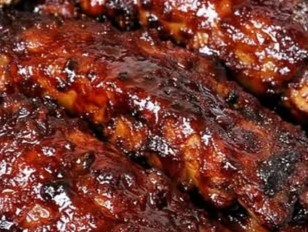
Ingredients:
- 3 to 4 pounds pork ribs (baby back or St. Louis–style)
- 1 1/2 cups bottled barbecue sauce
- 1 cup cola (regular, not diet)
Instructions:
Prepare the Slow Cooker
Line the bottom of your slow cooker with a large sheet of heavy-duty aluminum foil, leaving enough overhang to wrap the ribs completely. If necessary, overlap two sheets to prevent leaks.
Prepare the Ribs
Pat the ribs dry with paper towels. If desired, remove the thin membrane from the back of the ribs for more tender results.
Arrange the Ribs
Place the ribs inside the foil-lined slow cooker, meaty side up. Cut into smaller sections if needed to fit. Slight stacking is acceptable.
Make the Sauce
In a bowl, whisk together the barbecue sauce and cola until smooth.
Coat the Ribs
Pour the sauce mixture evenly over the ribs, ensuring all surfaces are well coated.
Seal the Foil
Fold the foil up and over the ribs, sealing tightly to create a closed packet. This traps steam and helps tenderize the meat.
Cook
Cover with the slow cooker lid and cook:
- On LOW for 7 to 8 hours
- On HIGH for 4 to 5 hours
The ribs are done when the meat is very tender and easily pulls away from the bone.
Finish and Serve
Carefully open the foil, watching for hot steam. Spoon the thickened sauce over the ribs before serving.
Optional Broiling Step
For a caramelized finish, transfer the ribs to a foil-lined baking sheet, brush with extra sauce, and broil for 3 to 5 minutes until the edges begin to char and the sauce bubbles.
Variations and Tips
- Add crushed red pepper flakes or hot sauce for heat
- Use hickory or mesquite barbecue sauce for a smoky flavor
- Add a small amount of liquid smoke for a deeper barbecue taste
- Substitute cola with root beer or Dr Pepper for a different sweetness
- Country-style ribs can be used; trim excess fat if needed
Storage
Store leftovers in an airtight container in the refrigerator for up to 3 days. Reheat gently in the sauce to maintain moisture.
Serving Suggestions
Serve with coleslaw, cornbread, or roasted vegetables for a complete meal. Leftover meat can be shredded and used in sandwiches, wraps, or added to baked beans.